
Your most important decision

When most people think of living ethically, they most often think of things like recycling, fair trade, and saving energy. But from an ethical perspective, your choice of career matters far more than anything else.
This was true ten years ago, but as we stand on the brink of human-level AI, I’ll argue it’s even more true today.
You’ll spend about 80,000 hours at work over your life. Unless you happen to be the heir to a large estate, it’s the biggest resource you have to make a difference.
That means even very small improvements to your career matter a great deal. If you can increase the overall impact of your career by just 1%, it would be worth spending up to 800 hours working out how to do that.
And it’s possible to increase the impact of your career by much more than 1%. And by far more than people realise.
When you poll people about how much more effective they think the best development charities are at saving lives compared to the average, they guess they’re about 50% better. A noticeable difference, but not huge.
Poll experts in global health, however, and they’ll say the best are around 100 times more cost effective, a difference of 10,000%.
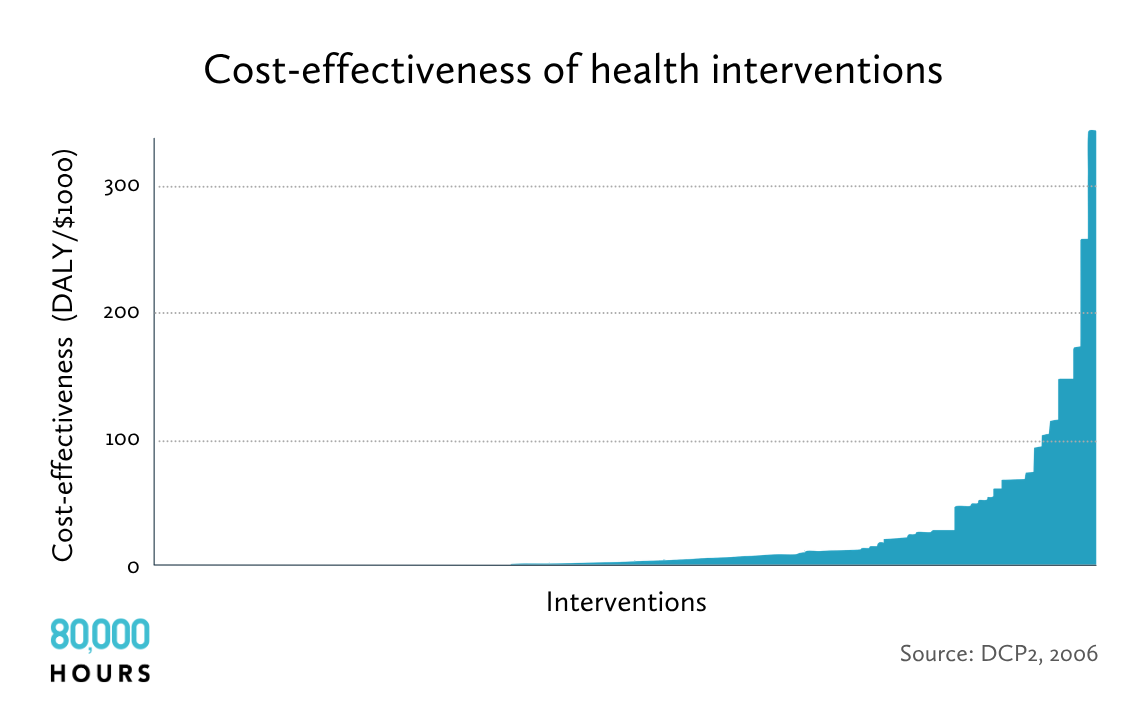
In short, there are huge differences in the impact of different ways of helping people, but no one knows about them.
And that’s within a single area looking backwards.
We may now be on the brink of human-level AI. In the next three to ten years, we face risks from AI that could kill a large fraction of people, such as AI-enabled bioweapons, or others that could permanently disempower humanity, such as concentration of power into a small minority of companies, or loss of control of autonomous AI agents.
These risks only have a few thousand people working on them at best, making them over 100 times more neglected than global health.
People joke we may now only have 8,000 hours left in our careers. But if true, these are the years in which your choices matter most. They’re your chance to help humanity navigate its most dangerous moment.
The personal stakes have increased too. Gen Z are more pessimistic than ever, and over half of people are worried their job will be automated. They’re right to be concerned. The traditional answers — law, medicine, consulting — no longer obviously make sense like they once did. But AI tools have also made it possible for teams of three to accomplish what would have taken thirty before, and the value of the skills needed to do that are increasing dramatically. As the pace of change accelerates, small differences in your decisions get magnified.
In general, careers differ in impact for three main reasons:
Some problems are far bigger and more neglected. Most people who want to do good still focus on social issues in their home country, but today the world faces truly existential risks with hardly anyone working on them. (More.)
Some paths let you contribute far more. Most altruistic people focus on traditional helping careers, but unknown government bureaucrats, executive assistants, and even podcasters can often affect far more people. (More.)
Some careers give you higher chances of outsized success. A landmark study of leaders across a range of fields found that about half of the contributions were made by the top 10% of the performers. (More.)
These three factors multiply together rather than merely add. If you can eventually find a problem that’s twice as big or neglected, make twice as large a contribution to it, and find a path where your chances of success are twice as high, then (holding all else equal) you can expect to have eight times as much impact.
In practice, I think it’s often achievable to have 10 or 100 times as much impact as what you would have done otherwise, and sometimes 1000 times more.
It’s easy to gloss over these differences. Intuitively, people often group careers into those that “help” (e.g. doctor, charity worker, teacher), those that are neutral (e.g. accountant), and those that are unethical (e.g. oil baron). But that’s a huge mistake.
If among careers that are “impactful” you can find an option that’s 100 times more impactful again, then 10 years doing that could achieve what would have taken 1,000 years otherwise. You could spend the remaining 30 years of your career meditating on the beach and still have done far more good for the world.
If you can’t change job right now, finding a way to contribute indirectly through your current role, such as by donating, spreading ideas or community building, can also often achieve than standard helping careers, provided you target that effort at the right issues. (And if you need to take care of yourself and immediate family right now, do that first.)
What might this impact look like more concretely? I’ve argued that anyone capable of earning a graduate salary in a high-income country can save 80 lives over their career – and that’s a lower bound, and without changing job. If you have the privilege be able to switch paths and work on something unconventional, your impact should be a lot higher.
I’d also argue it’s often better for you personally. A sense of meaning is a big part of life satisfaction, and pursuing it makes you more resilient, more likely to get help, and more likely to build skills that the world actually values. So much career advice is self-focused, telling you to follow your passions and make money. But people do both and still feel empty at the end. This isn’t to say it’s easy to work on the world’s problems, but it’s worth trying.
When you look back on this time in history, how will you wish you’d responded?
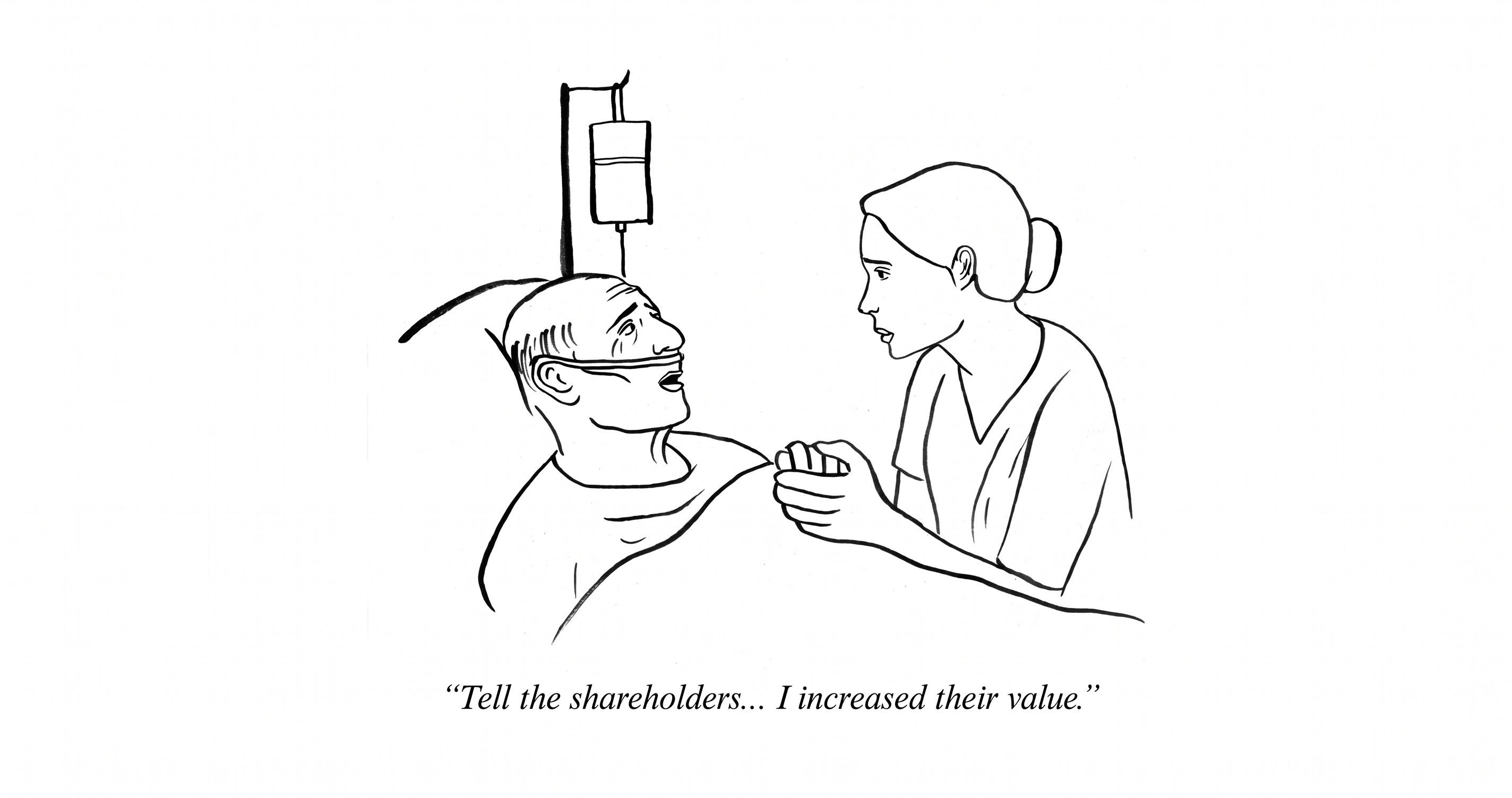
All this is why I wrote 80,000 Hours. I believe many people can find work that’s both more rewarding and more impactful than the standard defaults.
And as the world faces one of its most dangerous moments, now more than ever, we need people trying to tackle the world’s biggest problems, rather than making PowerPoints at PwC.
The book aims to be a complete guide to how. I’ve tried to make it the most research-backed and forward-looking career guide ever written. It’s the culmination of 15 years of thinking about these questions.
It’s out now, and is available anywhere you can buy books (inc. an audiobook, narrated by yours truly).
I’m deeply grateful for any shares on social, Amazon reviews or recommendations.
To help us hit the bestseller lists, buy before the 30th from an independent store.
Or here’s a link to Amazon.
Thank you!
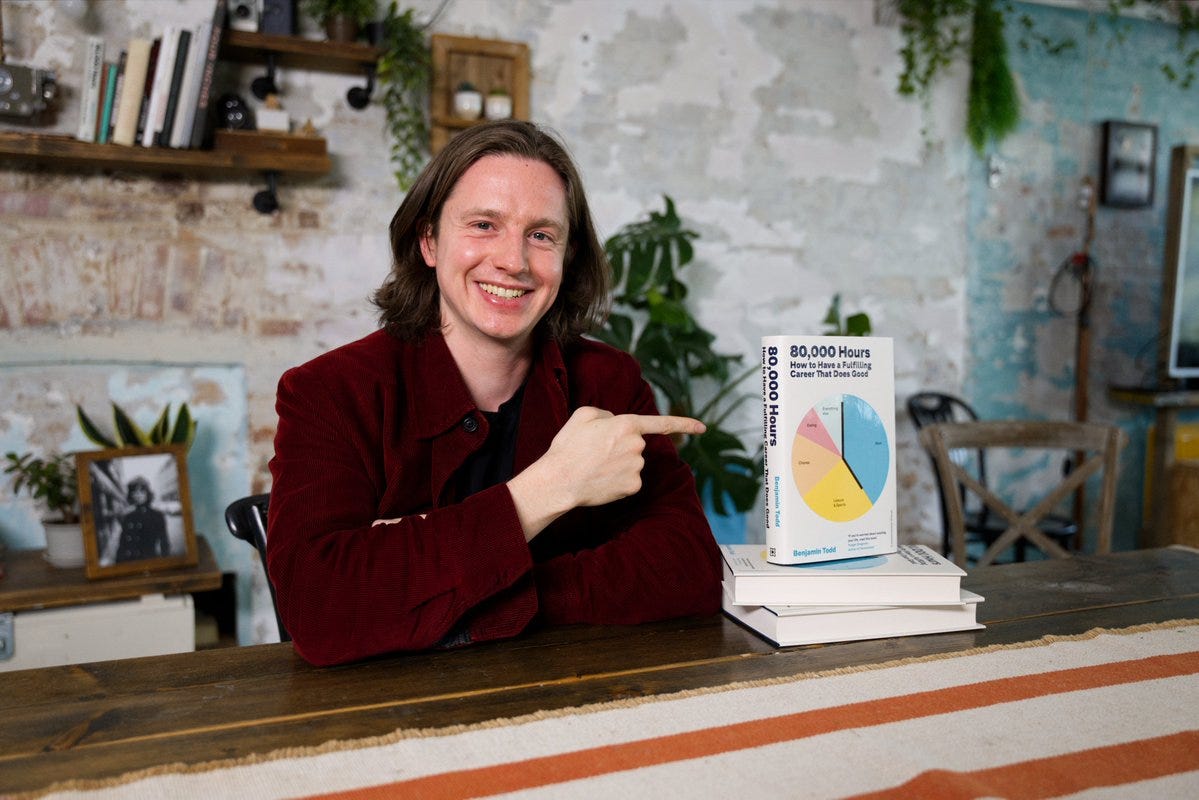
I really wish these articles said something more to the effect of, "if you're a middle class person who does not have dependents of whatever kind (including incurably sick relatives like the one pictured), or other compelling moral obligations or challenging social/personal circumstances that make employment difficult or impossible, *then* your choice of career is the most important decision you may ever make. These solidly middle class individuals are the people we overwhelmingly spend our time with throughout our lives, from school to university, at home and at Oxford/London/SF. And indeed we began life exclusively targeting graduates from elite universities, and this advice is always going to be most applicable to them on average if only because of the way they're disproportionately drawn from favourable socioeconomic backgrounds where career will most easily leap to the top of the list of priorities.
While we could point to examples where this is not the case, we'd be dishonest to say they're as well represented in our coaching or even the parties we go to, relative to the wider population.
We in Effective Altruism generally work in a world where most of the people we know will inherit at least some money or assets, a critical part of getting on the housing ladder for many in the UK, and we would struggle to name nearly as many people who have passed through our career coaching from eg deprived areas of the north west of England or council estates on dysfunctional coastal towns, as we would people who went to elite universities. We could easily name 100 people who went to Oxford before naming 100 who qualified for free school meals, despite the latter being a much larger number.
So this is not a random sampling of the wider population, and we would be hubristic to think we've really worked out the single most important thing anyone ever could decide."